Private Policy presented its Fall Winter 2026 collection at Webster Hall, transforming the venue into something far more immersive than a traditional runway. From the moment guests entered, the experience was intentional. Ramen was served. The atmosphere felt communal, familiar, and grounded in everyday ritual. It immediately set the tone for a show that was not only about what was worn, but about the lives surrounding it.
Released around Lunar New Year, the collection reflected on renewal, but through the lens of continuity rather than reinvention. Private Policy framed Asian labor as an ongoing narrative, connecting early immigrant histories to present day experiences. The show did not isolate the past. It carried it forward, allowing it to exist within the same space as contemporary identity.
Concept & Mood
The mood was deliberate and grounded. There was no separation between the concept and the environment. Serving ramen at the entrance was not a performative gesture. It created a point of entry that felt personal, referencing everyday culture while subtly reinforcing themes of labor, care, and community.
As the show unfolded, that same sense of intention carried through. The pacing was steady, allowing each look to register without distraction. Rather than dramatizing its message, the collection allowed meaning to build through repetition and contrast. It felt observational, almost documentary in its approach, while still maintaining a strong design perspective.
Palette, Materials & Silhouettes
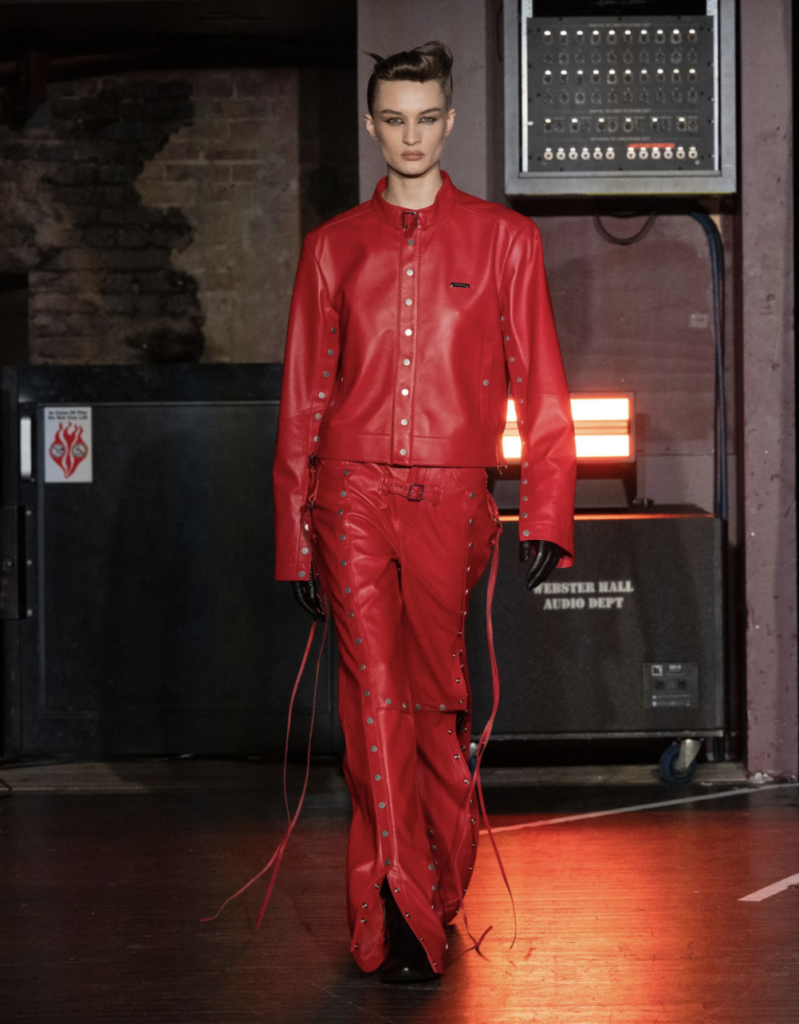
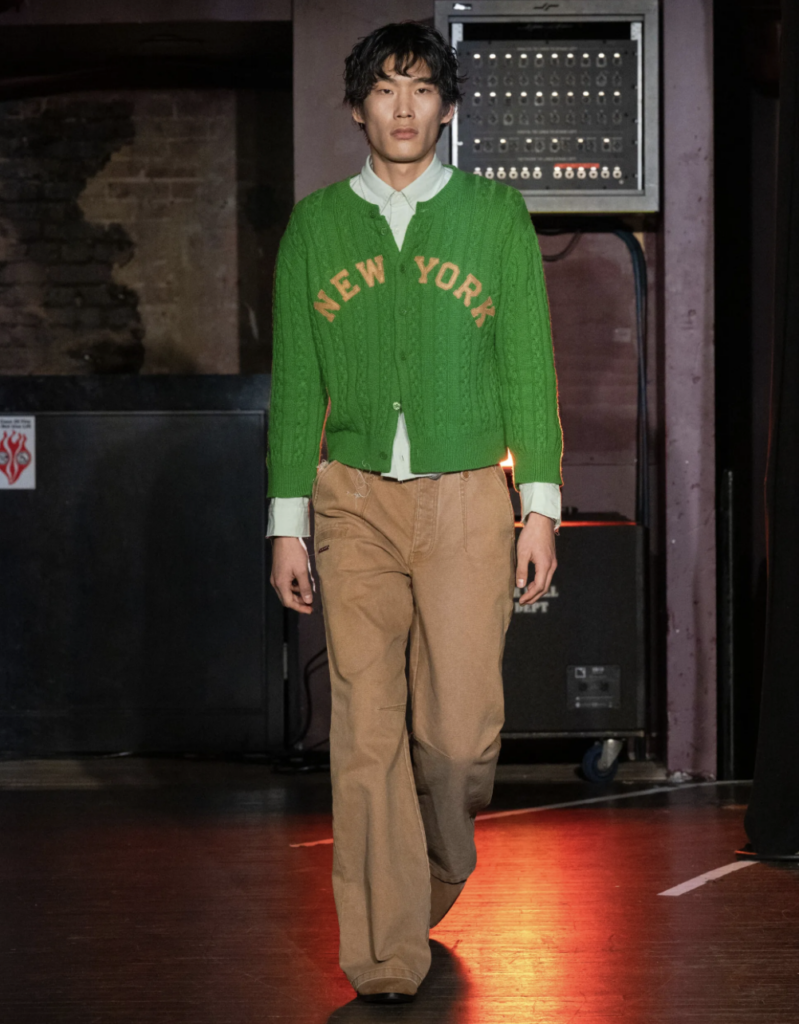
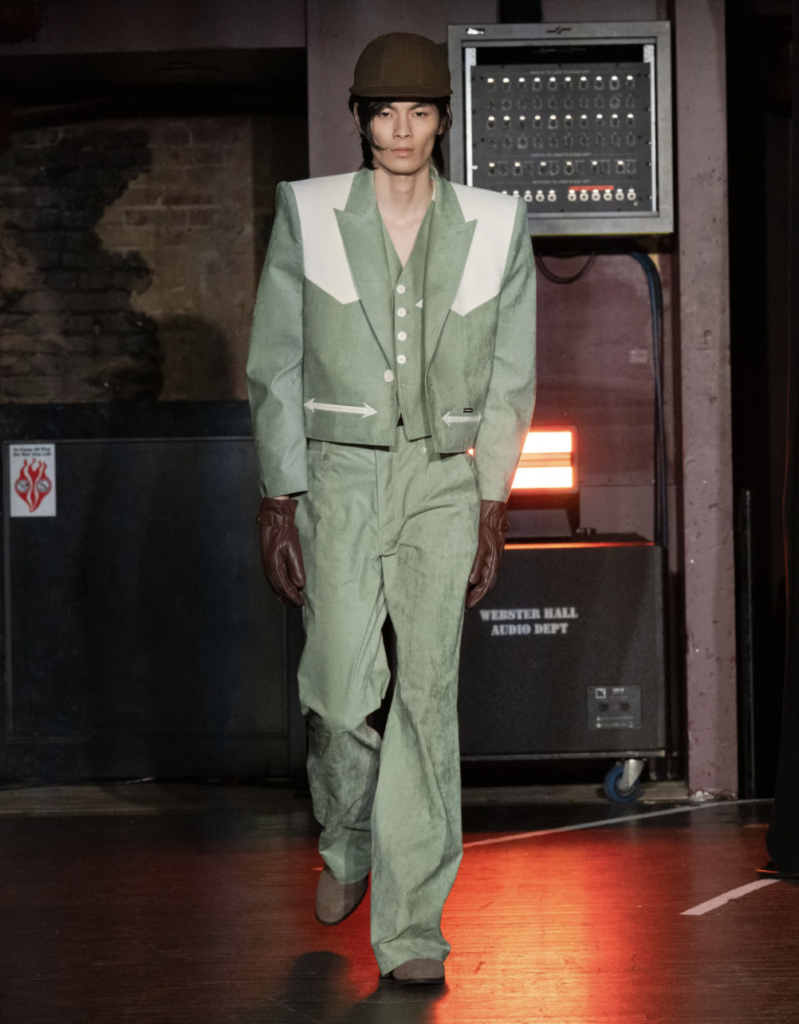
Color story: The palette drew from both landscape and industry. Earth tones, rusted reds, and muted blues anchored the collection, referencing the American West as well as institutional environments. The colors created a sense of continuity, allowing the narrative to move across time without disruption.
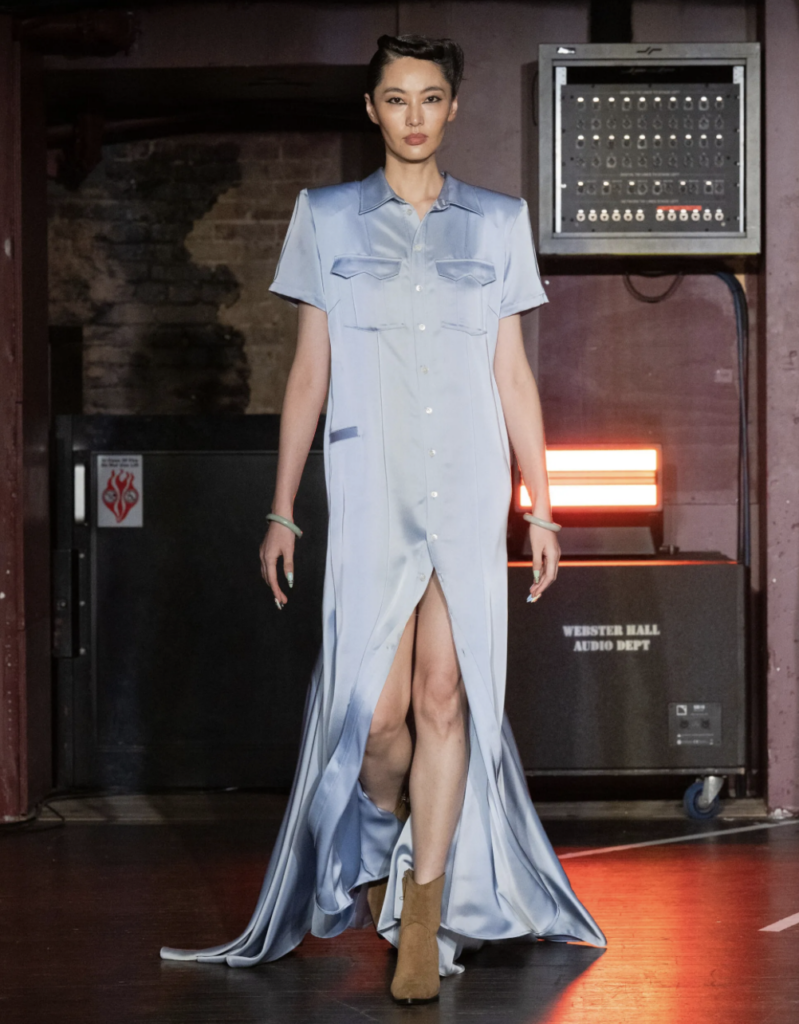
Textures & fabrics: Material contrast played a central role. Traditional workwear structures appeared in elevated fabrics with a subtle sheen, shifting garments associated with physical labor into a more visible, almost confrontational space. Distressed textures remained present, marking time and use without erasing them.
Silhouettes & detail:: Workwear formed the foundation. Reinforced seams, functional cuts, and multi pocket constructions referenced garments built for endurance. Alongside this, 1980s inspired tailoring introduced a second layer. Power shoulders, sharp suiting, and pencil skirts reflected entry into professional and institutional spaces.
The contrast felt precise. Physical labor and corporate presence existed within the same collection, emphasizing that while the form of labor evolves, it does not disappear. Each silhouette carried that tension between visibility and expectation.
Themes & Takeaways
The collection centered on the evolution of labor across generations. By referencing nineteenth century railroad workers alongside 1980s professional dress, Private Policy traced a broader trajectory of Asian experience in America. It highlighted not just physical work, but the emotional and psychological labor tied to assimilation, adaptation, and survival.
The setting at Webster Hall reinforced this narrative. The choice to create an environment that felt lived in, rather than elevated or distant, grounded the collection in reality. It reminded the audience that these histories are not abstract. They exist in everyday moments, in shared meals, in spaces of gathering.
Visibility emerged as a key theme. Where earlier generations were excluded from dominant narratives, the collection asserted presence. Not loudly, but clearly. Through fabric, through structure, through context.
Final Thoughts
Private Policy’s Fall Winter 2026 show was as much about experience as it was about design. By integrating environment, history, and garment, the brand created a presentation that felt cohesive and considered.
What made the show resonate was its ability to hold complexity without overexplaining it. It acknowledged the past, examined the present, and suggested a future where these stories are no longer peripheral.
The result was a collection that did not just present clothing, but offered a perspective. One that feels grounded, continuous, and fully aware of the space it occupies.