For Spring/Summer 2027, AKNVAS brought a literary reference to the New York Fashion Week runway, drawing from Hans Christian Andersen’s The Wild Swans. Titled Swans Before Innocence, the collection by founder and creative director Christian Juul Nielsen unfolded as a three-act presentation, taking the audience from familiar wardrobe staples into a world of sculptural denim, wild florals and romantic eveningwear.
What made the show particularly interesting was the way its inspiration informed the clothes without overpowering them. Rather than relying on the fairy tale as a visual theme alone, Nielsen incorporated elements of the story into the construction, embellishment and styling of the collection. The result was a runway presentation that felt considered, with each act building on the one before it.
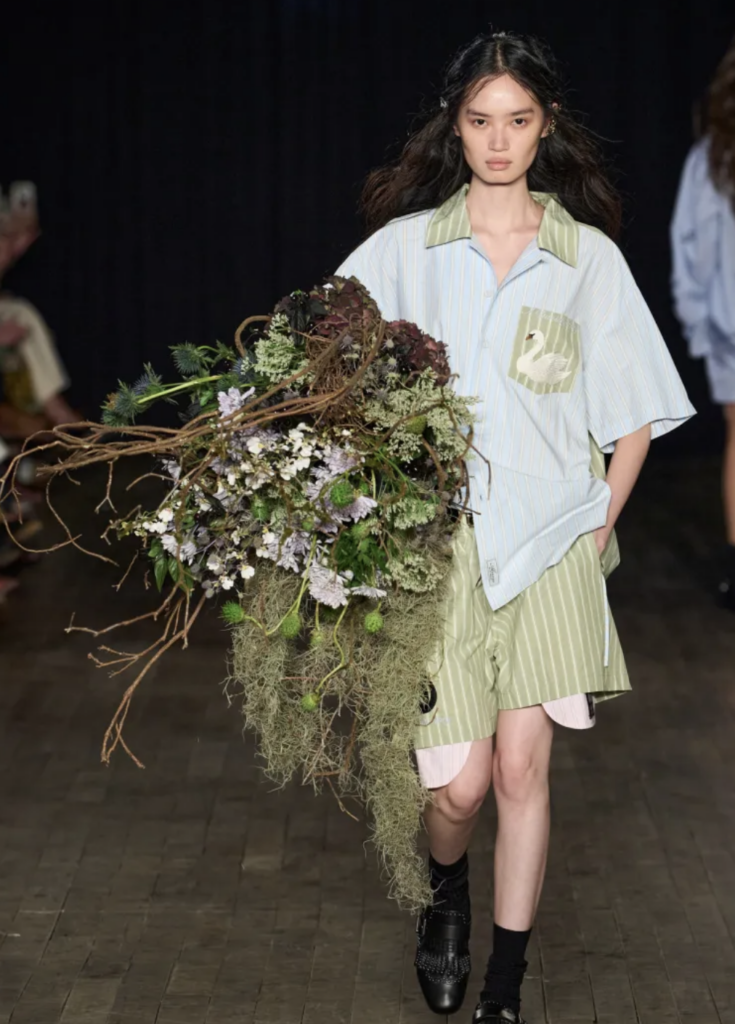
The show opened with Eleven Shirts, a chapter centered on one of Nielsen’s recurring design interests: shirting. Mixed-striped cottons, floral embroidery and swan motifs reworked an otherwise familiar wardrobe staple. Some sleeves wrapped around the waist and became part of the trouser construction, shifting the proportions of traditional shirting into something more unexpected. The details were subtle but deliberate, introducing the swan imagery that would continue throughout the collection.
The reference comes from Andersen’s tale of a princess who must sew eleven shirts from stinging nettles to save her brothers, who have been transformed into swans. Her silence is central to the story, and the shirts become the means through which the curse can be broken. On the runway, this narrative gave the opening looks a purpose beyond aesthetics, connecting the collection’s craftsmanship to the story at its center.
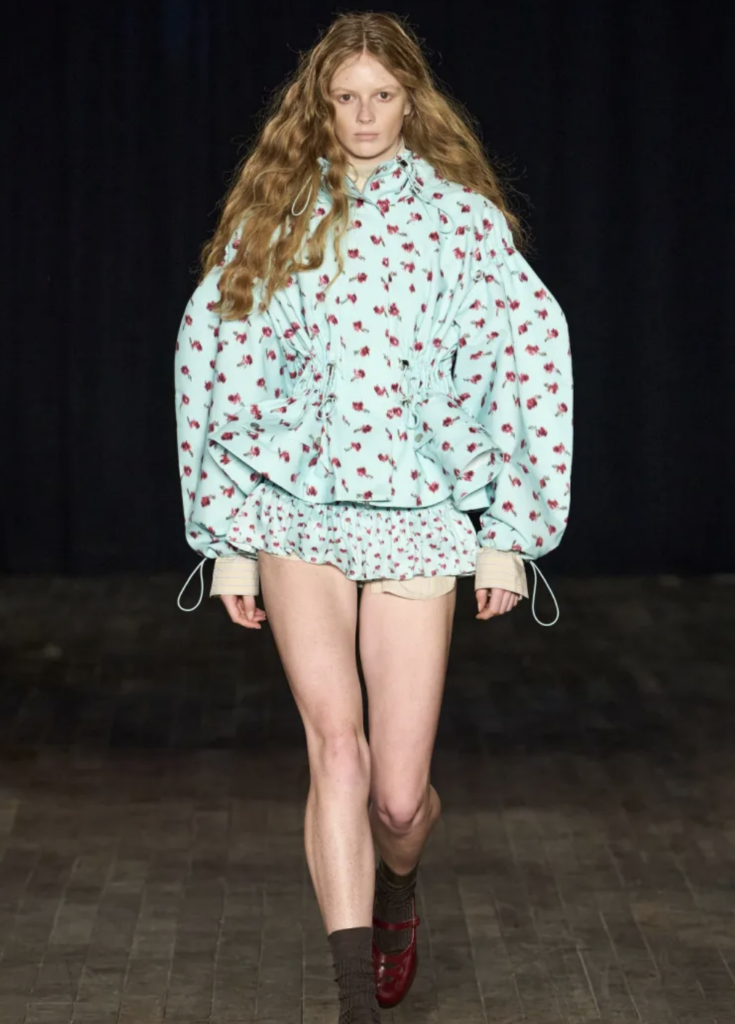
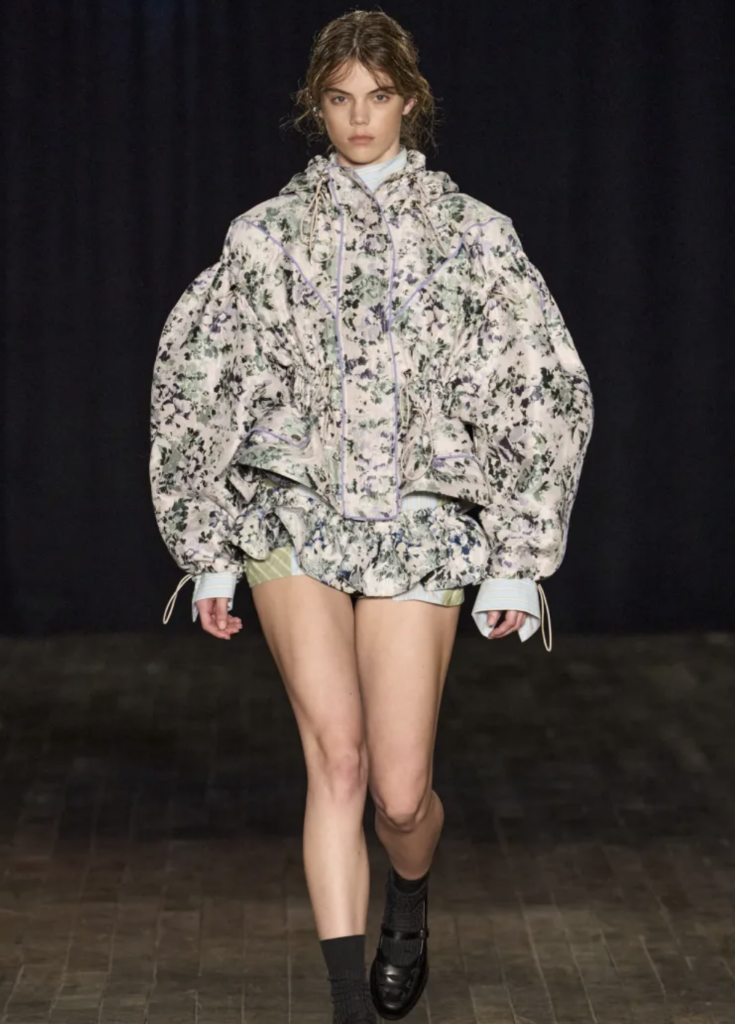
From there, the presentation moved into Forest Nymph, where the silhouettes became more expressive. Utility-inspired jackets, floral outerwear and sculpted denim introduced a different kind of movement. Denim, in particular, was treated as a material open to experimentation, with ruffles and exaggerated volume moving it away from its traditional associations. The collection found an interesting balance between practicality and fantasy, allowing familiar pieces to take on a more sculptural quality.
Nature also became part of the runway’s visual language. Models carried oversized bouquets of flowers in leather totes and raffia bags, bringing the enchanted forest referenced in Andersen’s story into the presentation itself. Floral details appeared across outerwear and sheer layers, creating continuity between the clothing and accessories. Rather than feeling like separate styling choices, these elements helped carry the narrative forward.
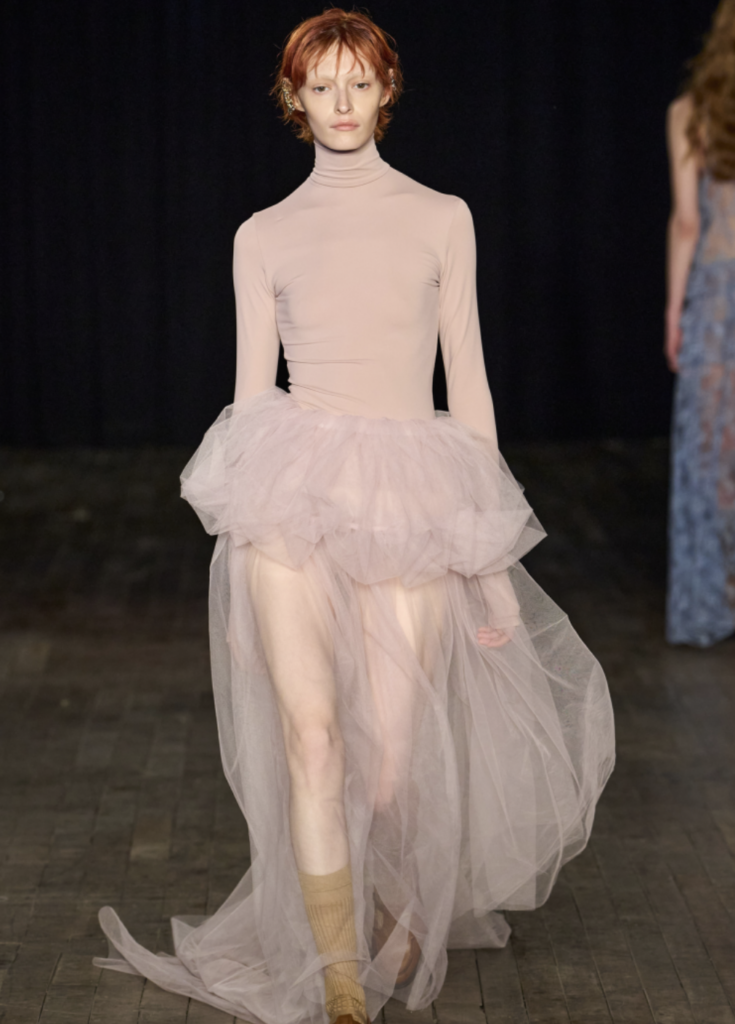
The final act, Wild Swans, marked the collection’s most dramatic shift. Asymmetric lace gowns, ribbons and ruffles gave way to sweeping high-low skirts and voluminous tulle. The proportions became more theatrical, with layers of fabric trailing behind the models and suggesting the movement of wings. Pastel shades and vivid color appeared alongside black, adding contrast to the softness of the sheer fabrics and romantic silhouettes.
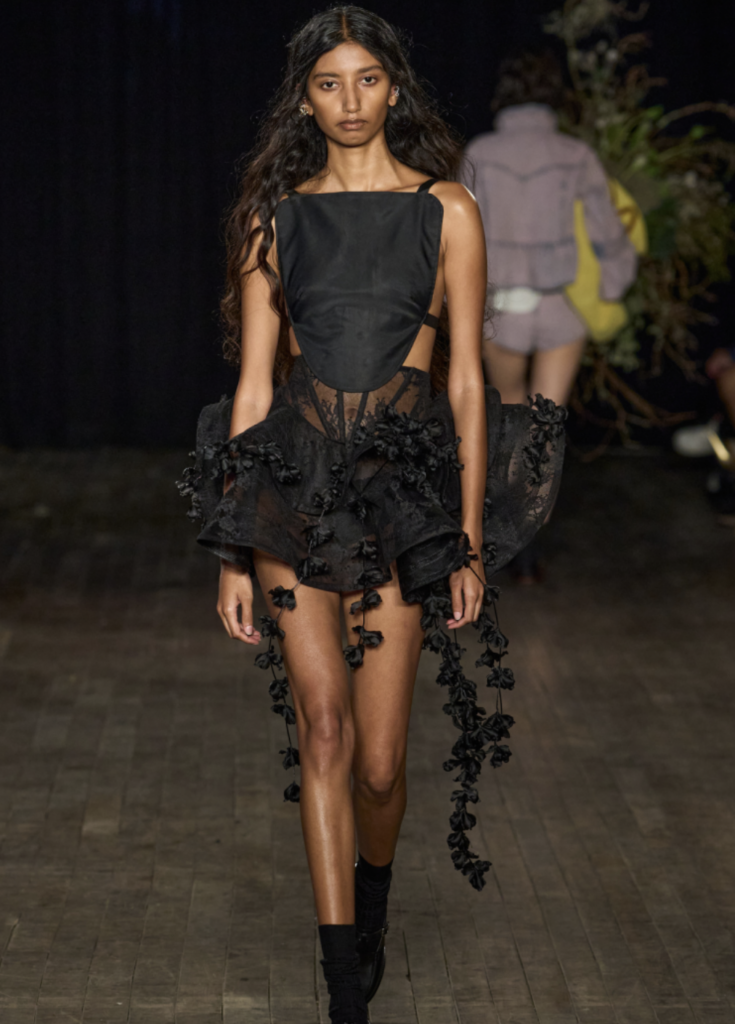
It was here that the collection’s title came fully into focus. The earlier chapters had established the familiar, gradually introducing elements of nature and fantasy. The closing looks brought those ideas together through movement, transparency and volume. The progression felt intentional, allowing the clothes to tell the story rather than asking the audience to rely on the reference alone.
There is something compelling about a designer who can take a childhood fairy tale and find a contemporary fashion language within it. At AKNVAS, the story became a framework for exploring proportion, material and the relationship between everyday dressing and occasionwear. Shirting was reconstructed, denim was softened through sculptural detailing, and eveningwear embraced a more dramatic sense of movement.
With Swans Before Innocence, Nielsen delivered a collection that moved between the practical and the fantastical without losing sight of the clothes themselves. It was romantic, but not limited to conventional ideas of femininity; detailed, but never dependent on embellishment alone. Across its three acts, AKNVAS demonstrated how a narrative can give a collection depth, transforming a runway show into something that feels less like a series of individual looks and more like a story unfolding in real time.